



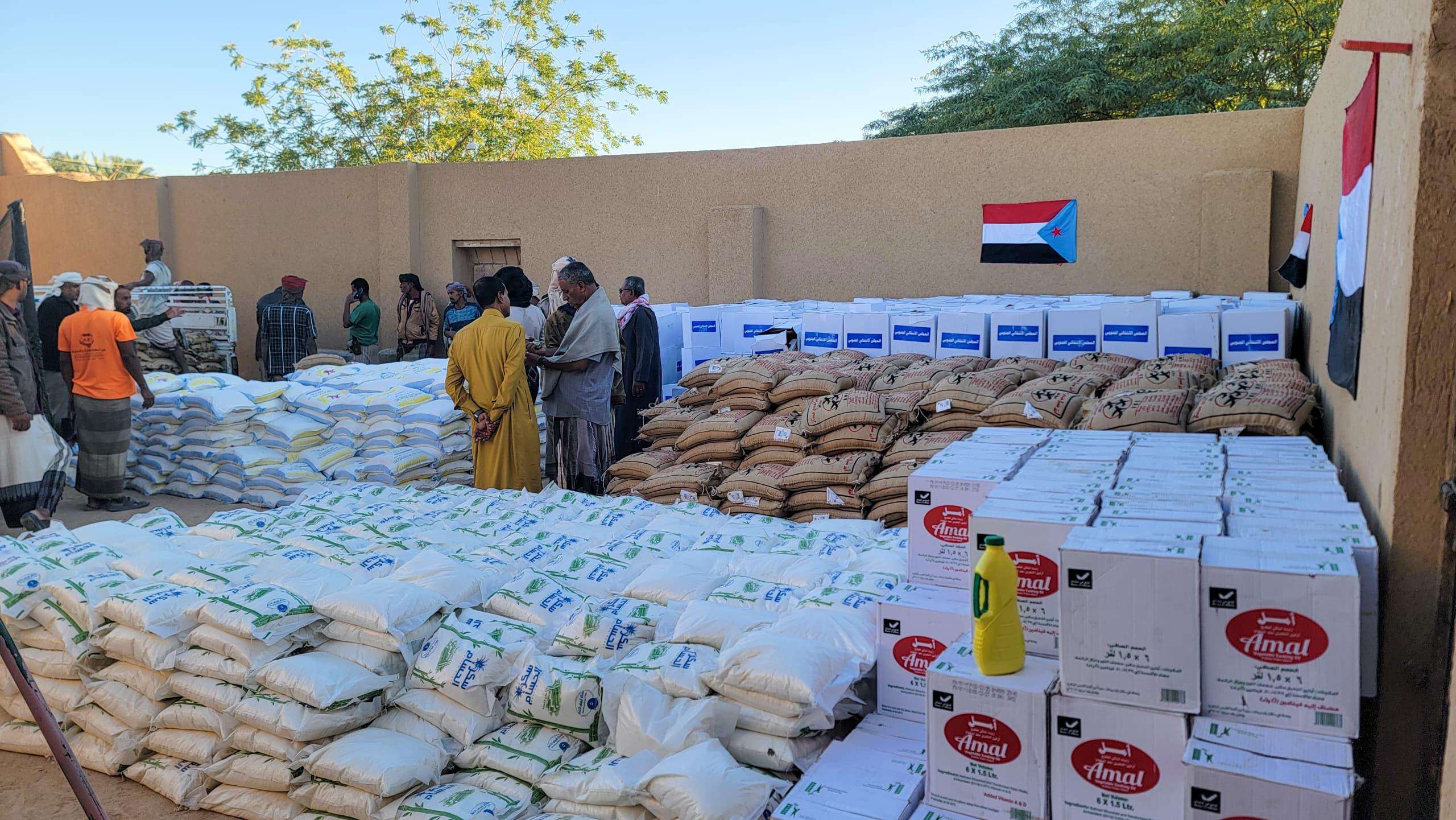
STC Al-Qatn Continues Distributing Food Baskets for Vulnerable Families
The local leadership executive body (LLEB) of the Southern Transitional Council (STC) in Qatn distri...
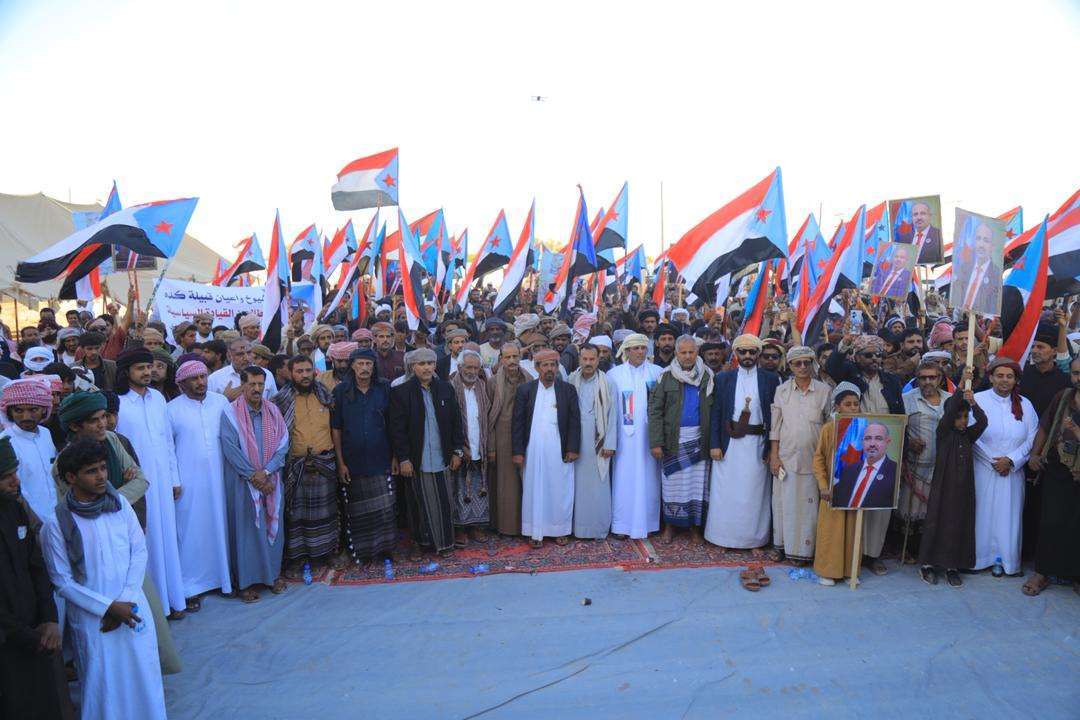
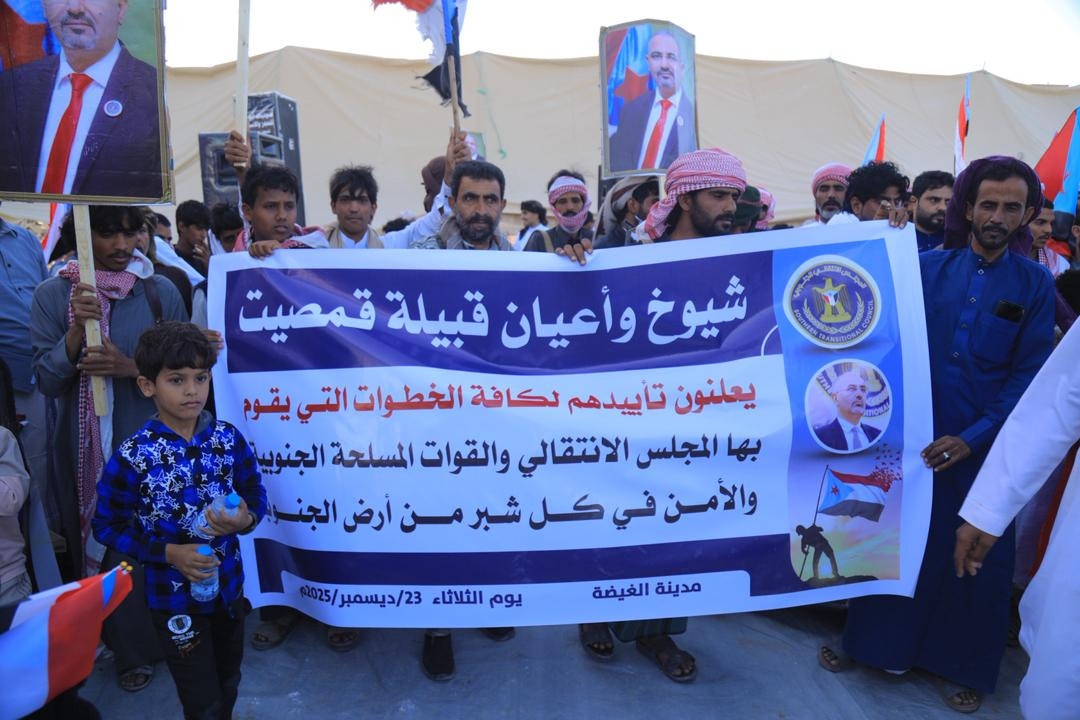
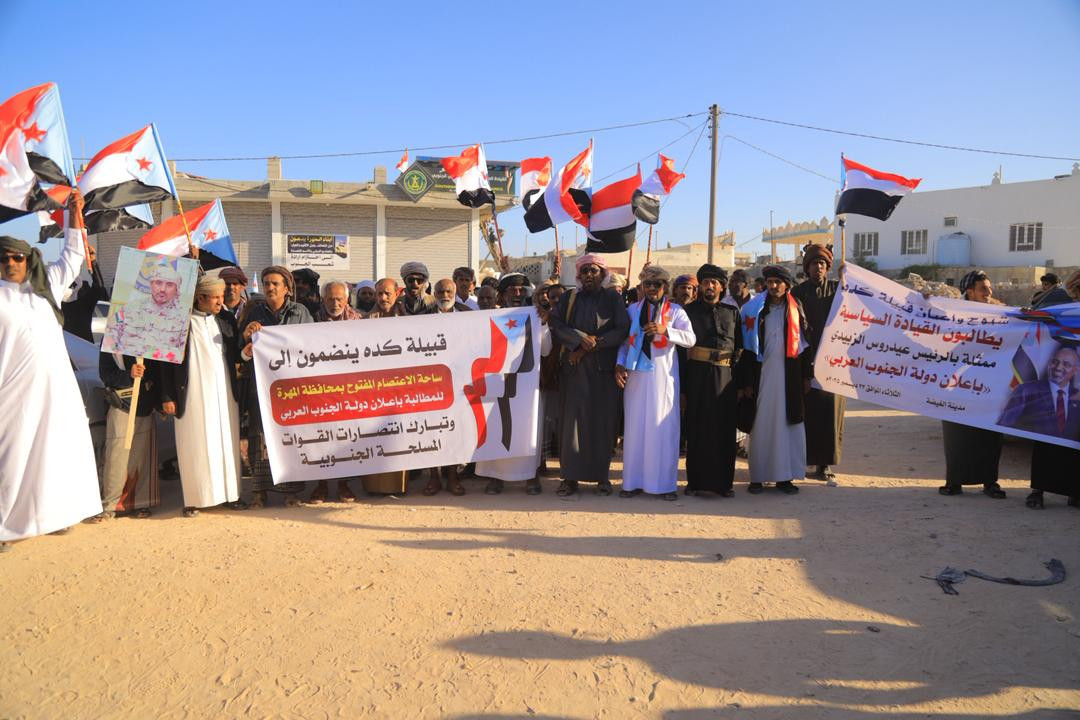
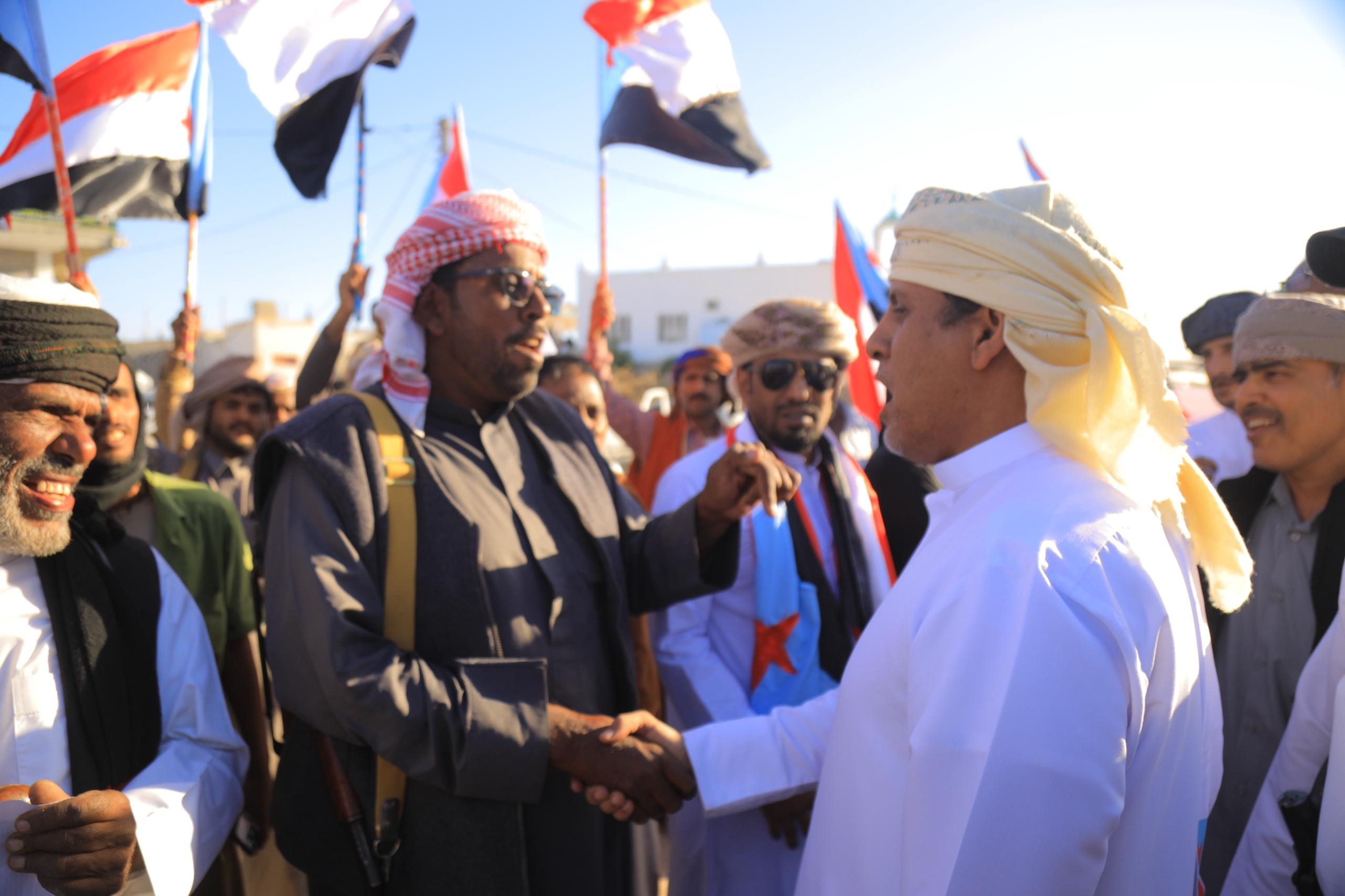
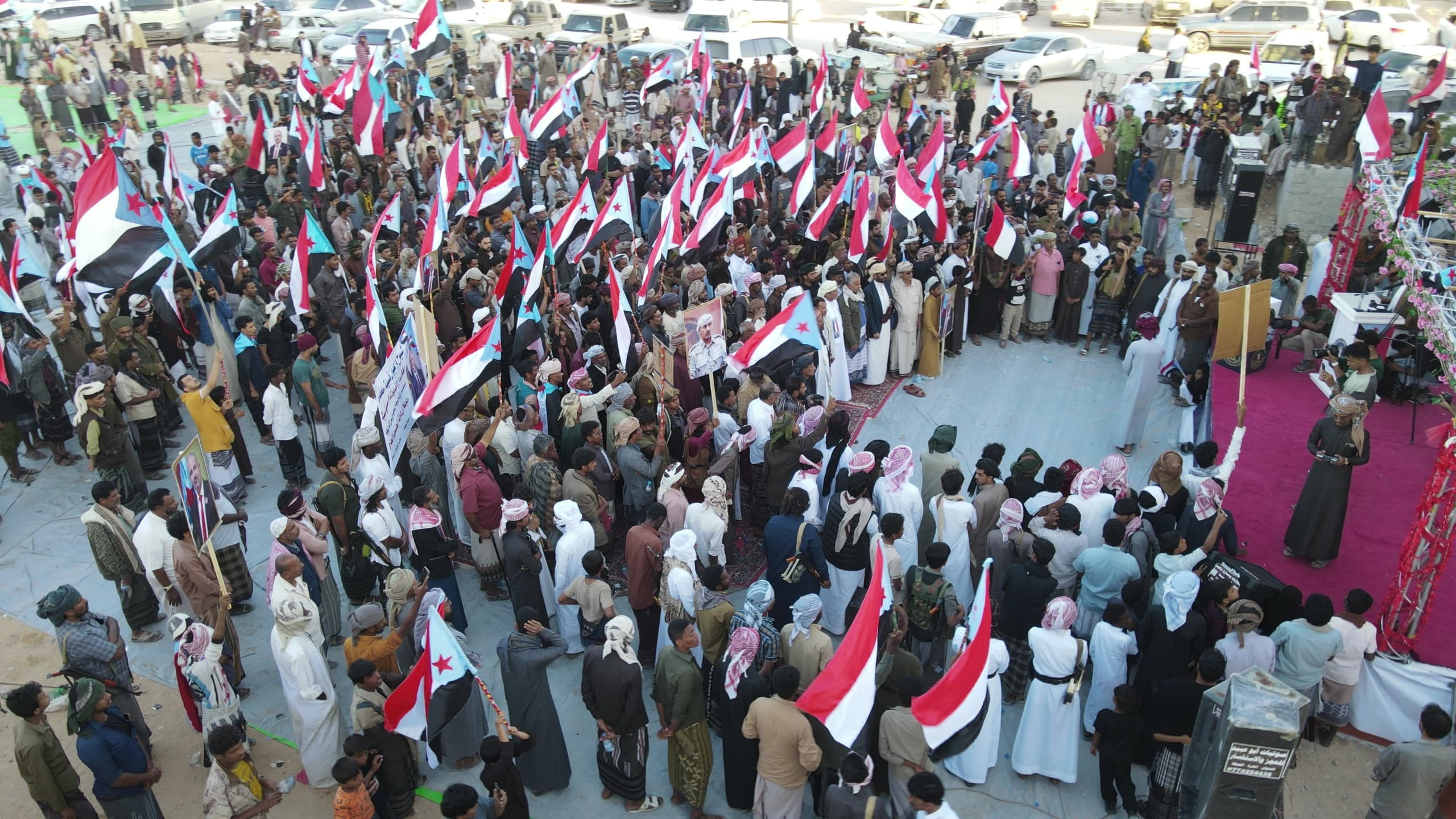
The open-ended popular sit-in square in the city of Al-Ghaydah in Al-Mahra governorate witnessed, on Tuesday, the joining of tribes from Kalashat, Kaddah, Samudah, Al-Sulaimi, Qamsait, and Awrait, along with tribes from Yafe’a and Shabwa in the governorate, as well as a number of dignitaries and sheikhs in a move reflecting growing popular and tribal momentum in support for demands by people in the South to restore their state.
The tribal delegations were received in the presence of two members of the Presidium of the Southern Transitional Council (STC), Dr. Salem Al-Qumairi and Sheikh Rajeh Saeed Bakrit, Abdulrahim al-Sadiq, head of the STC’s executive body in Al-Mahrah, as well as a number of political leaders and social and tribal figures.
Sheikh Bakrit welcomed the tribes of Kalshat, Kaddah, Qamsait, Al-Sulaimi, Samudah, and Awrait, along with tribes from Shabwa and Yafe'a in the governorate and masses of residents of Al Ghaydah district, reaffirming that the sit-in would continue and that the arrival of tribes is ongoing and reiterating the demand to declare the State of South Arabia.
For his part, al-Sadiq stated the continued arrival of tribes and community groups at the sit-in square sent a clear message to the world that people in the South were united in their legitimate demands and committed to peaceful and organized means of expressing the popular will to restore the state of South Arabia, build a better future for coming generations, and preserve the values of social cohesiveness.
The event featured speeches calling for the declaration of the state of South Arabia, alongside the recitation of poetry, in a scene reflecting cultural diversity and social solidarity in support of the sit-in and its demands. The ongoing influx of tribes and community components to the sit-in square reflects the awareness among citizens of Al-Mahrah and the South in general of the importance of this phase.
The local leadership executive body (LLEB) of the Southern Transitional Council (STC) in Qatn distri...
The head of the Local Leadership Executive Body (LLEB) of the Southern Transitional Council (STC) in...
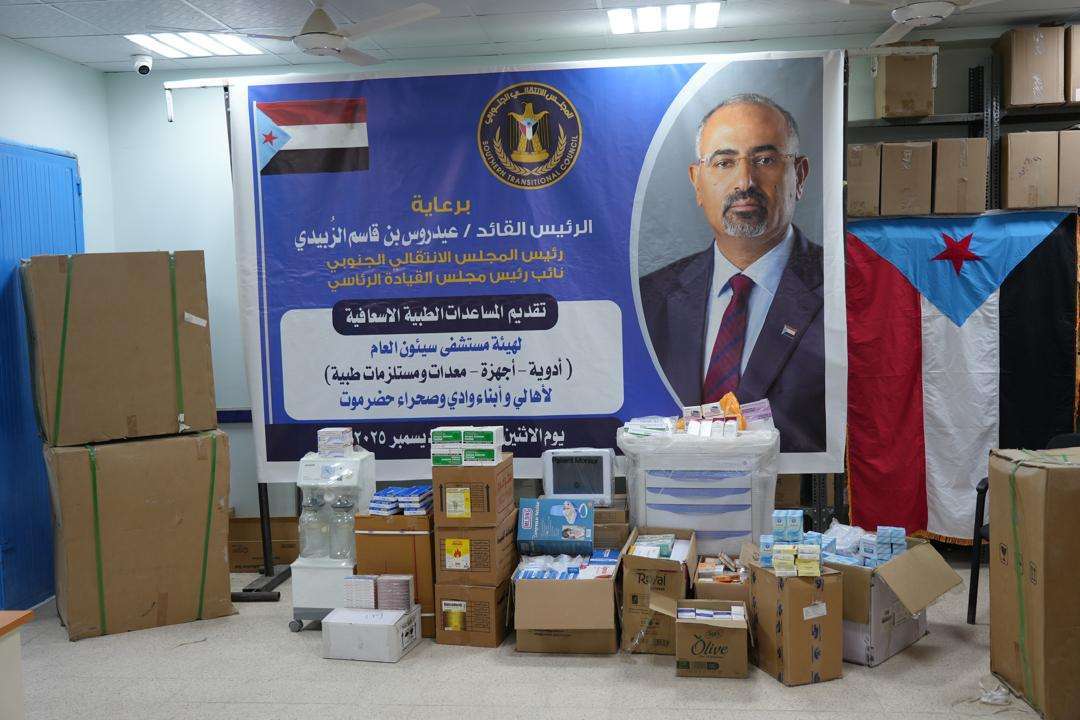
The local leadership executive body (LLEB) of the Southern Transitional Council (STC) in Hadhramaut...
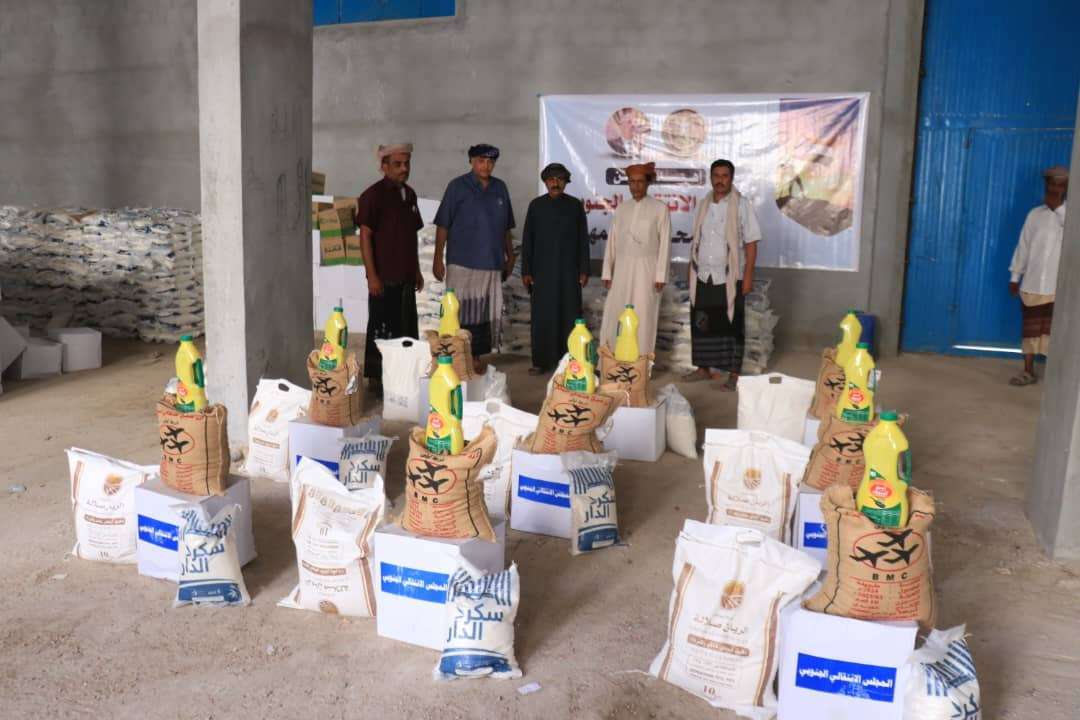
The Local Leadership Executive Body (LLEB) of the Southern Transitional Council (STC) in Al-Mahrah g...